

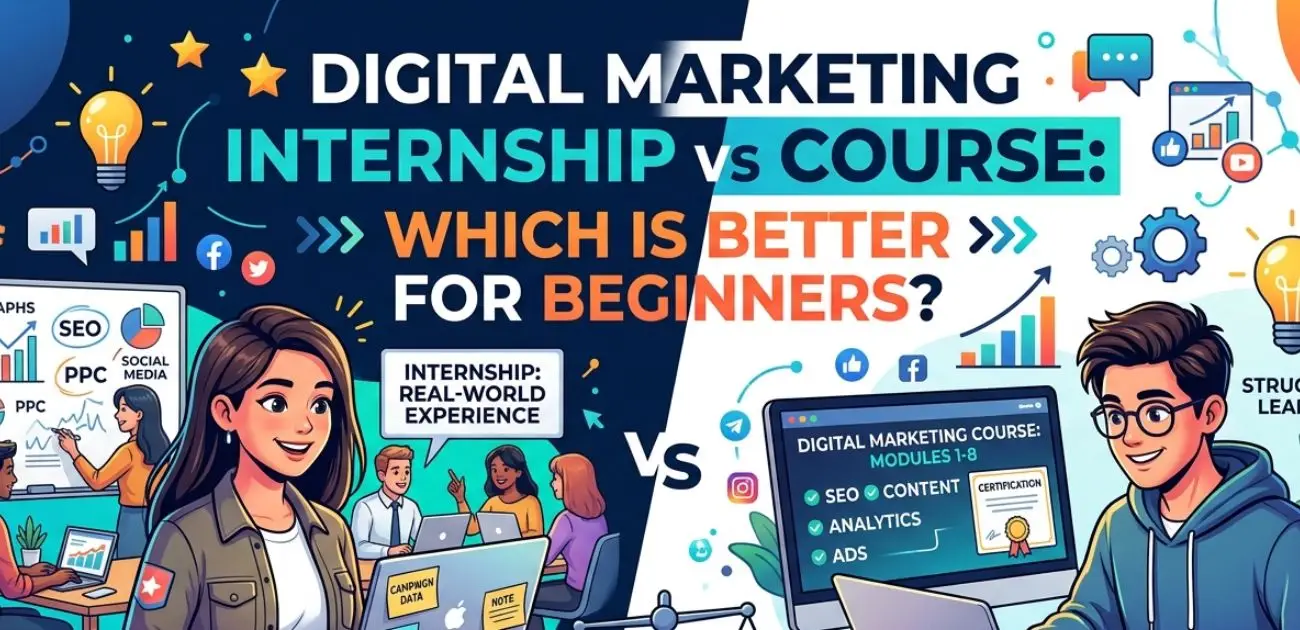
Digital Marketing Internship vs. Course: Which Path Boosts Your Career Faster?
Every year, thousands of students, fresh graduates, and job seekers enter the digital marketing field with the same question: should they join a course first or start with an internship? The confusion is understandable. Digital marketing is one of the few industries where skills, practical experience, certifications, creativity, and results all matter at the same time.
Many beginners assume that an internship alone will teach everything, while others believe a course is enough to secure a job. In reality, successful digital marketers often build their careers through a combination of structured learning and practical implementation. Employers increasingly look for candidates who understand digital marketing concepts and can apply them in real-world situations.
Across Malappuram, the growing demand for digital marketing professionals has encouraged more learners to seek industry-focused training. Institutions that combine practical assignments, live projects, and career-oriented guidance are helping beginners move from theory to real-world execution more effectively. Understanding the differences between a course and an internship can help you make the right decision for your career goals.
What Is a Digital Marketing Course?
A digital marketing course is a structured training program designed to teach the concepts, strategies, tools, and techniques used in online marketing.
Unlike self-learning through random videos, a well-designed course follows a planned learning path that helps students understand how different digital marketing channels work together. Most programs cover search engine optimization (SEO), social media marketing, Google Ads, content marketing, analytics, email marketing, and AI-powered marketing tools.
For beginners, a course provides:
- Step-by-step learning
- Guided mentorship
- Industry-recognized certifications
- Practical assignments
- Tool-based training
- Career guidance
This is why many learners searching for a Digital Marketing Institute in Malappuram begin with structured training before pursuing internships or jobs.
What Does a Digital Marketing Course Usually Include?
A comprehensive digital marketing course typically covers multiple specializations rather than focusing on a single skill.
Core modules often include:
- Search Engine Optimization (SEO)
- Google Ads and PPC Advertising
- Meta Advertising
- Content Marketing
- Social Media Marketing
- Website Optimization
- Email Marketing
- Conversion Rate Optimization
- Marketing Analytics
- AI Tools for Marketing
- Performance Marketing
Many modern training programs also include:
- Live projects
- Case studies
- Portfolio creation
- Interview preparation
- Freelancing guidance
- Industry certifications
The goal is not simply to teach tools but to help students understand why marketing strategies work and how to apply them effectively.
What Is a Digital Marketing Internship?
A digital marketing internship is a practical learning opportunity where students work on real projects within an agency, company, startup, or marketing team.
Instead of learning concepts in a classroom environment, interns participate in actual marketing activities.
Common internship responsibilities include:
- Keyword research
- Content creation
- Social media management
- SEO implementation
- Campaign monitoring
- Competitor analysis
- Performance reporting
- Client communication
An internship exposes beginners to workplace expectations and helps them understand how marketing campaigns are executed in real business environments.
How Is an Internship Different From Classroom Learning?
Although both approaches help learners grow, their learning environments are very different.
A course focuses on:
- Concepts
- Frameworks
- Strategy
- Tool training
- Structured progression
An internship focuses on:
- Execution
- Deadlines
- Team collaboration
- Client requirements
- Problem-solving
During classroom learning, mistakes become lessons. During internships, mistakes may directly affect campaign performance, website traffic, or advertising budgets.
This difference is why internships are often considered practical training environments, while courses provide foundational understanding.
Why Do Beginners Consider a Course or Internship?
Most beginners have one goal: securing a successful digital marketing career.
However, they often face challenges such as:
- No prior experience
- Limited industry exposure
- Lack of technical knowledge
- Uncertainty about career paths
- Difficulty building a portfolio
As a result, they look at courses and internships as potential solutions.
Some learners prefer courses because they want structured guidance. Others prefer internships because they believe practical experience leads directly to employment.
The best choice depends on an individual’s current skill level and career objectives.
Who Should Choose a Digital Marketing Course?
A digital marketing course is often suitable for:
Students
Students can build industry-ready skills before graduation.
Fresh Graduates
Graduates entering the job market benefit from learning industry fundamentals.
Career Switchers
Professionals moving from other industries require structured training before entering marketing roles.
Entrepreneurs
Business owners can learn how to promote their products and services online.
Freelancers
Freelancers can develop service-based skills and expand their earning opportunities.
If you are starting from zero, a course generally provides the foundation needed to understand digital marketing concepts and tools effectively.
Who Should Choose a Digital Marketing Internship?
An internship may be ideal for learners who already understand the basics of digital marketing.
Suitable candidates include:
- Students who have completed a course
- Learners with certification knowledge
- Freelancers seeking practical exposure
- Freshers building a portfolio
- Individuals preparing for job interviews
Internships help bridge the gap between learning and professional execution.
What Are the Key Differences Between a Digital Marketing Internship and a Course?
Several factors separate these two learning methods.
Learning Structure
Course
- Organized curriculum
- Progressive learning path
- Mentor guidance
Internship
- Task-driven learning
- Real workplace environment
- Project-based exposure
Practical Experience
Course
- Simulated projects
- Guided assignments
Internship
- Real campaigns
- Real client work
Certifications
Course
- Certification opportunities
Internship
- Experience certificates
Career Readiness
Course
- Builds knowledge
Internship
- Builds confidence and workplace skills
Portfolio Development
Course
- Practice projects
Internship
- Real-world project evidence
Many professionals recommend combining both approaches because each addresses different aspects of professional growth.
When Should a Beginner Choose a Digital Marketing Course?
A beginner should consider a course when:
- They have no prior marketing knowledge.
- They are unfamiliar with marketing tools.
- They need structured guidance.
- They want certification.
- They are exploring career opportunities.
Starting with a course reduces confusion and provides clarity before entering practical environments.
When Should a Beginner Choose an Internship?
An internship becomes valuable when:
- Basic concepts are already understood.
- Tool familiarity exists.
- The learner wants practical exposure.
- Portfolio building is a priority.
- Job readiness is the goal.
Internships can accelerate growth once foundational skills are already in place.
How Does a Digital Marketing Internship Build Practical Skills?
Practical learning occurs through direct participation in marketing activities.
Interns may learn:
SEO Implementation
- Website audits
- Keyword research
- On-page optimization
Social Media Management
- Content scheduling
- Audience engagement
- Performance tracking
Paid Advertising
- Campaign setup
- Budget monitoring
- Ad optimization
Content Marketing
- Blog writing
- Content planning
- SEO content optimization
Analytics and Reporting
- Google Analytics review
- Campaign reporting
- Data interpretation
This real-world exposure helps learners understand how marketing strategies perform outside a classroom environment.
Can Beginners Do a Digital Marketing Internship Without a Course?
Yes, but the experience may be challenging.
Without foundational knowledge, beginners often struggle with:
- Marketing terminology
- Analytics interpretation
- SEO concepts
- Advertising platforms
- Campaign strategy
For this reason, many employers prefer interns who have completed at least some form of digital marketing training.
Should You Do a Course and Internship Together?
For many beginners, this combination delivers the strongest learning experience.
Benefits include:
- Faster skill development
- Better portfolio creation
- Stronger interview performance
- Greater confidence
- Improved employability
A course teaches the “why.”
An internship teaches the “how.”
Together, they create a more complete learning experience. Many modern training providers now integrate internships, live projects, and classroom learning to help students become industry-ready.
How Can You Choose the Right Digital Marketing Course or Internship in Malappuram?
Before enrolling, evaluate the following:
Does the Program Offer Practical Training?
Look for:
- Live projects
- Real campaign exposure
- Portfolio development
Are Trainers Industry Experienced?
Mentors should have practical digital marketing experience rather than purely academic backgrounds.
Does the Curriculum Cover Current Tools?
The syllabus should include:
- SEO
- Google Ads
- Meta Ads
- Analytics
- AI tools
Is Placement Assistance Available?
Career support can significantly improve employment opportunities.
Are Certifications Included?
Recognized certifications improve credibility and visibility during recruitment.
These factors are especially important when selecting a Digital Marketing Institute in Malappuram.
What Skills Do Employers Expect From Beginner Digital Marketers?
Recruiters increasingly seek practical abilities alongside certifications.
Desired skills include:
- SEO fundamentals
- Content writing
- Social media management
- Analytics interpretation
- Paid advertising knowledge
- Communication skills
- Problem-solving ability
- AI-assisted marketing skills
Employers often value demonstrable work and portfolio evidence alongside theoretical knowledge.
Why Is Practical Experience Becoming More Important in Digital Marketing?
The digital marketing landscape changes rapidly.
Algorithms evolve. Advertising platforms update. Consumer behavior shifts. New AI tools emerge regularly.
As a result, companies increasingly prioritize candidates who can demonstrate practical execution rather than simply discuss concepts. Evidence of campaign management, optimization, reporting, and content creation often strengthens job applications.
What Mistakes Should Beginners Avoid When Choosing a Course or Internship?
Common mistakes include:
- Selecting programs based only on price
- Ignoring practical training opportunities
- Focusing solely on certifications
- Overlooking trainer expertise
- Not reviewing placement support
- Joining internships without basic knowledge
- Choosing outdated curricula
Avoiding these mistakes can save significant time and accelerate career growth.
How Can a Beginner Build a Strong Digital Marketing Portfolio?
A portfolio demonstrates capability more effectively than claims alone.
Ways to build one include:
- Personal blogging projects
- SEO case studies
- Social media campaigns
- Google Ads simulations
- Internship projects
- Website optimization exercises
- Content marketing samples
Documenting measurable results makes portfolios even stronger and more attractive to employers.
What Are the Career Opportunities After Learning Digital Marketing?
Digital marketing skills open multiple career paths.
Popular roles include:
- SEO Executive
- Digital Marketing Executive
- Social Media Specialist
- PPC Specialist
- Content Marketer
- Performance Marketer
- Email Marketing Specialist
- Marketing Analyst
- Freelancer
- Digital Marketing Consultant
The growing adoption of online marketing continues to expand opportunities across industries, making digital marketing one of the most promising career fields for beginners.
Why Is Malappuram Emerging as a Growing Hub for Digital Marketing Education?
Businesses across Kerala are increasingly investing in digital channels to reach customers. This demand has created opportunities for digital marketing training, internships, freelancing careers, agency-based employment, and entrepreneurship.
Malappuram has witnessed a growing interest in digital skills among students, graduates, and business owners. As awareness of online marketing grows, more learners are seeking structured education and practical exposure to enter the field successfully.
Conclusion
The debate between a digital marketing internship and a course does not have a single answer for everyone. A course helps beginners understand concepts, strategies, tools, and industry frameworks, while an internship provides exposure to real campaigns, workplace responsibilities, and practical execution.
For most beginners, the strongest path is often to learn the fundamentals first and then apply those skills through practical experience. This approach balances knowledge and implementation while building confidence, employability, and long-term career growth.
Across Malappuram, institutions that focus on practical assignments, real projects, industry-oriented learning, and career support are helping aspiring marketers develop the skills needed in today’s competitive digital world. By choosing the right learning path and continuously improving your skills, you can build a successful and rewarding digital marketing career for years to come.